
Latvia’s Fairest-Paying Employers in 2026: Accenture Latvia Branch and Linde Gas
2026/09/23
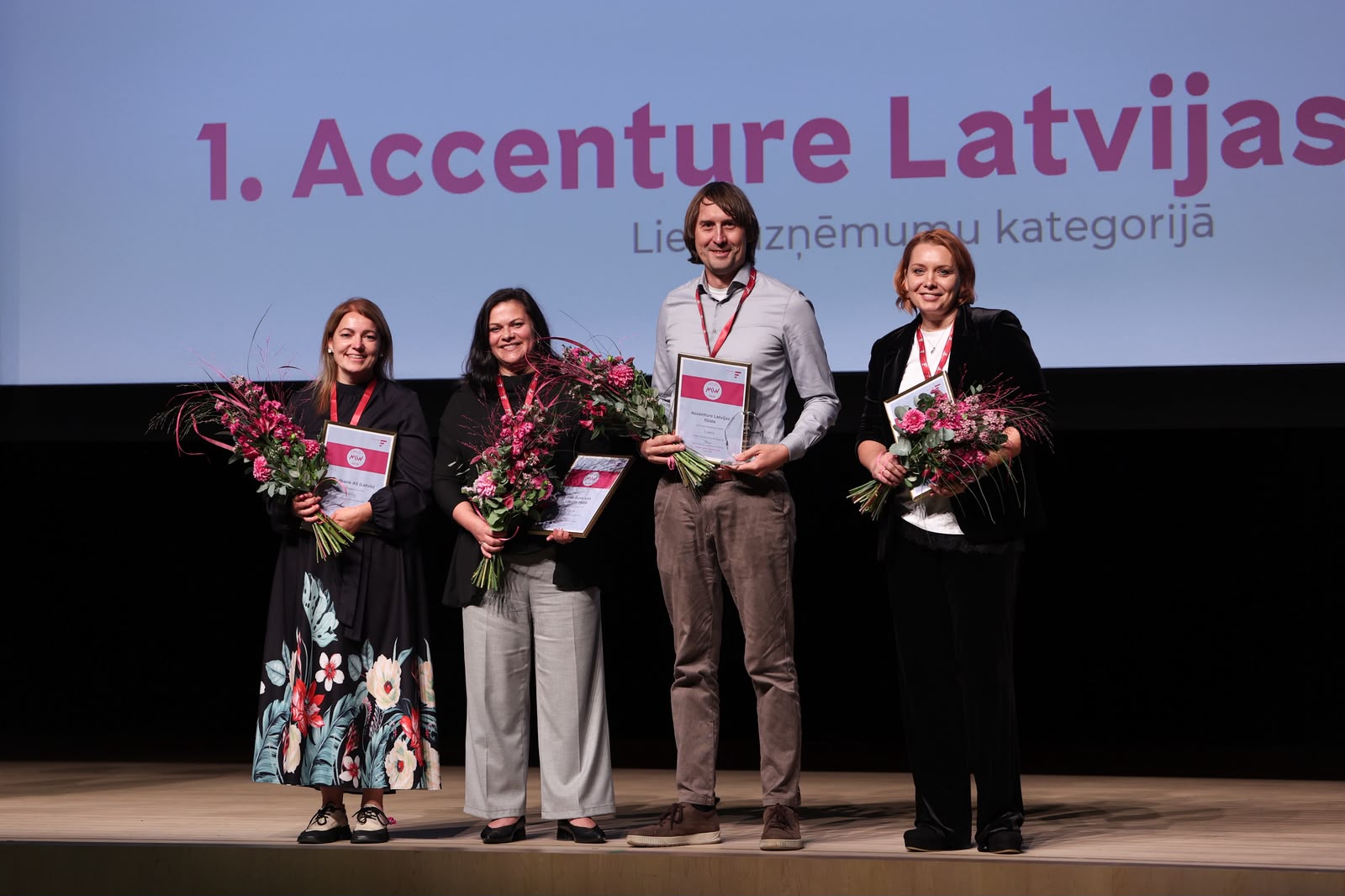
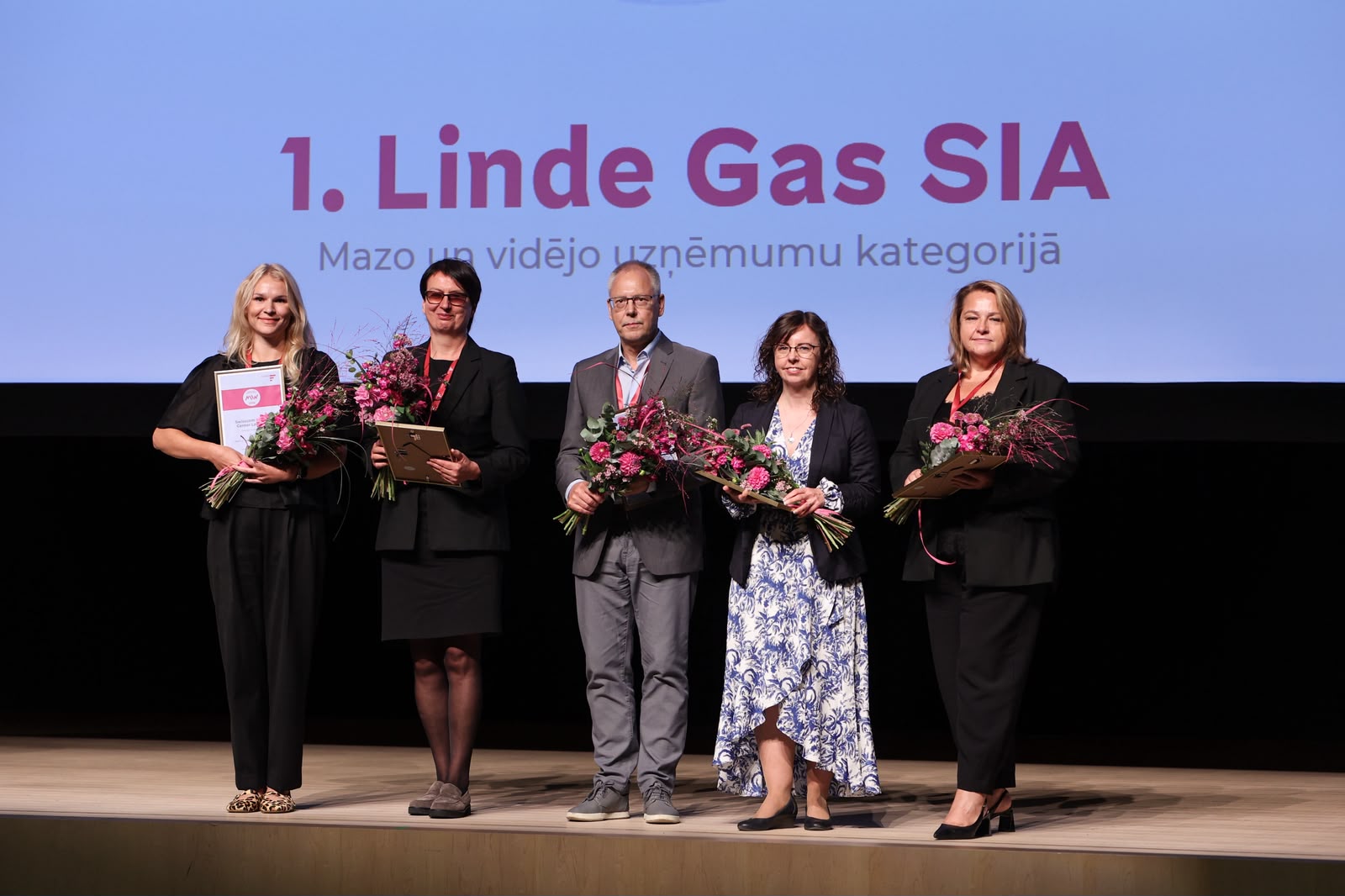
Compensation research and management consulting company Figure Baltic Advisory has announced Latvia’s fairest-paying employers of 2026 in the large organisation and small and medium-sized organisation categories. This year, last year’s leaders have retained their top positions: Accenture Latvia Branch ranks first among large organisations, while Linde Gas ranks first among small and medium-sized organisations. The 2026 living wage has also been calculated: for a single adult living in Riga, it has reached EUR 1,697, up 2.4% year-on-year, while in Latvia’s regions it stands at EUR 1,477, an increase of 1.5%.
The fairest-paying employers of 2026 in the large organisation category are Accenture Latvia Branch (1st place), DNB Bank ASA Latvia Branch (2nd), Riga International Airport (3rd), Dinair Filton (4th), Swedbank (5th), Latvian State Roads (6th), JELD-WEN Latvija (7th), AE Partner (8th), Redwire Defense Tech Riga (9th) and Latvia’s State Forests (10th).
In the small and medium-sized organisation category, Linde Gas ranks first, followed by Stora Enso Packaging (2nd), Scandic Fusion (3rd), Norwegian Air Resources Latvia (4th), Swisscom DevOps Center Latvia (5th), Pearl Latvija (6th), Freeport of Riga Authority (7th), Arvato Systems Latvia (8th), Vitol Terminal Latvia (9th) and ITAB Latvia (10th).
The researchers note that competition for a place among Latvia’s fairest-paying employers remains strong. Several organisations have ranked among the top ten repeatedly, while both category winners have now retained their leading positions for the second consecutive year. At the same time, new companies have entered the ranking, demonstrating that a growing number of employers are paying close attention to systematic and fair remuneration practices.
“When compiling the ranking of the fairest-paying employers, particular attention is paid to internal equity – how employees performing work of equal value are compensated within an organisation – as well as external equity, which assesses the organisation’s remuneration levels against the broader labour market. Gender pay differences and the representation of women and men in senior management positions also play an important role,” explains Juris Nīmants, Manager and Lead Consultant at Figure Baltic Advisory.
One of the criteria used to assess remuneration fairness is the living wage. It represents the level of income required to cover a person’s basic needs and maintain a defined standard of living. In 2026, the living wage for a single adult in Riga reached EUR 1,697, an increase of EUR 40, or 2.4%, compared with the previous year. For a family of two adults and two children living in Riga, each adult would need to earn EUR 2,406 – EUR 92, or 2.0%, more than a year earlier.
In Latvia’s regions, the living wage for a single adult is EUR 1,477 this year, up EUR 22, or 1.5%, year-on-year. In a family with two adults and two children, each adult would need to earn EUR 2,049, an increase of EUR 42, or 1.0%, compared with the previous year. While individual needs – and consequently the living wage – vary from person to person, employers can use the statistically calculated living wage as a benchmark when developing and adjusting their remuneration policies.
“Fair pay is becoming increasingly important to both employers and employees. Employees expect their contribution to be recognised appropriately and want to understand the principles used to determine their pay. At the same time, organisations need to balance competitive remuneration with transparent pay policies and the responsible use of company resources. This makes a well-designed remuneration system increasingly important – one that allows organisations to clearly justify both overall pay levels and differences in remuneration between roles and employees,” says Juris Nīmants.
The award recognising Latvia’s fairest-paying employers has been presented since 2018 and is linked to Figure Baltic Advisory’s General Compensation Survey. The ranking takes into account a range of criteria, including the dispersion of monthly base salaries among positions of equal value; the dispersion of annual total cash compensation among positions of equal value; differences in monthly base salaries between women and men in equivalent positions; differences in annual total cash compensation between women and men in equivalent positions; the proportion of women and men in senior management roles; the proportion of employees whose monthly base salary falls below the first market decile, or 10th percentile; the proportion of employees whose annual total cash compensation falls below the first market decile, or 10th percentile; and the proportion of employees in Riga and Latvia’s regions whose remuneration is below the living wage.